Weather Memes :)
Tuesday, June 12, 2012


Wednesday, May 23, 2012
Neurology's Most Interesting Case
The year was 1848. A 25-year-old man named Phineas Gage was doing his usual job as a railroad supervisor, just as he did every other day, using an iron rod to pack blasting powder into a rock. What he didn't know is that this day wouldn't be just like any other. Without knowing it, an explosion occurred, driving the rod through Gage's cheek and out the top of his head. The shocking part? He lived, becoming one of the most interesting cases in neuroscience in history. A piece of his frontal lobe was taken out with the rod, plus his skull was cracked. Effects include a total twist in his personality from the brain damage. Now, following his death almost 150 years ago, his brain is still studied by scientists eager to figure out the mystery of Phineas Gage's survival and how his brain continued to function. His skull has been preserved to continue being studied. Recently, his brain and skull have been reconstructed using data files as a reference. This situation leaves neurologists with a new perception of the human brain.
This situation intrigues me. The fact that this man was able to live after such severe brain and skull damage puzzles me. It is evident why scientists are so interested in this study. This event caused researchers to consider the brain possibly working in a hidden manner that has yet to be discovered. I also find that it makes you think how something happening in just a few moments can have a lasting impact. It probably only took a few seconds for Phineas Gage's injury to occur. Now, almost 150 years later, it is still being studied and taken into account. This could also reign true for countless other moments.
The article can be found at http://www.popsci.com/science/article/2012-05/phineas-gage-neurologys-most-interesting-case-gets-his-head-re-examined-new-neural-map.

http://www.popsci.com/science/article/2012-05/phineas-gage-neurologys-most-interesting-case-gets-his-head-re-examined-new-neural-map.
http://www.123rf.com/photo_6150604_x-ray-human-brain-and-skull.html
This situation intrigues me. The fact that this man was able to live after such severe brain and skull damage puzzles me. It is evident why scientists are so interested in this study. This event caused researchers to consider the brain possibly working in a hidden manner that has yet to be discovered. I also find that it makes you think how something happening in just a few moments can have a lasting impact. It probably only took a few seconds for Phineas Gage's injury to occur. Now, almost 150 years later, it is still being studied and taken into account. This could also reign true for countless other moments.
The article can be found at http://www.popsci.com/science/article/2012-05/phineas-gage-neurologys-most-interesting-case-gets-his-head-re-examined-new-neural-map.
 |
| X-ray of a normal human head |
http://www.popsci.com/science/article/2012-05/phineas-gage-neurologys-most-interesting-case-gets-his-head-re-examined-new-neural-map.
http://www.123rf.com/photo_6150604_x-ray-human-brain-and-skull.html
Tuesday, May 8, 2012
The Connection Between Music and Emotions
A common outlet for the many emotions of many people is listening to music. It has been found that, depending on the person's selection of music, they may be making their bad mood worse, good mood even better, or vice versa. Specifically, teenagers turn to music to fit their every mood, from happy to sad to angry to excited. Especially when we are sad, we look to the sad songs on our iTunes playlist to drown into. However, this may be putting a dull mood at risk of becoming worse. It may even effect the way they see and think certain things. In the Netherlands, a study was conducted to test this. In this study, young adults took a visual detection test. They were to listen to 30 minutes of music (15 sad, 15 happy) while images of either happy or sad faces appeared faintly on a computer screen. It was found that the young adults participating in the study were able to distinguish the faces which fit the mood of the music playing at the moment. Also, at times, the subjects believed they saw sad faces during a sad song or happy faces during a happy song, when the screen was blank. The conclusion was made that music is able to alter one's emotions, also affecting their perception of certain things.
Since I am one to use music as an outlet of emotions, this article was immediately intriguing to me. I have felt that listening to a "blue" song when I match the emotion of it sometimes makes me feel better, but it also, other times, does put me deeper into the bad mood. The experiment carried out was also interesting to me, and I believe it was an interesting technique in finding proper results. Connecting feelings to a visual accurately shows the way music changes a person's perspectives and perceptions. The study explained in the article was interesting to me, and even allowed me to think on my personal connections to the beginning theory of the researchers.


Article can be found at http://news.yahoo.com/music-change-way-see-world-151800579.html
Pictures from http://www.newswise.com/articles/brain-music and http://www.ice.happycircle.co.uk/?p=648
Since I am one to use music as an outlet of emotions, this article was immediately intriguing to me. I have felt that listening to a "blue" song when I match the emotion of it sometimes makes me feel better, but it also, other times, does put me deeper into the bad mood. The experiment carried out was also interesting to me, and I believe it was an interesting technique in finding proper results. Connecting feelings to a visual accurately shows the way music changes a person's perspectives and perceptions. The study explained in the article was interesting to me, and even allowed me to think on my personal connections to the beginning theory of the researchers.
Article can be found at http://news.yahoo.com/music-change-way-see-world-151800579.html
Pictures from http://www.newswise.com/articles/brain-music and http://www.ice.happycircle.co.uk/?p=648
Thursday, March 29, 2012
Current Events
Over many decades, the rates of diagnoses of autism have been rapidly increasing. In just two years (2006-2008), they increased by over 20 percent. On March 22, the Centers for Disease Control and Prevention released a report on this topic, presenting the increasing rates of these diagnoses. However, researchers were unable to decide whether the numbers are because of the different "definitions" of the disorder, a natural spike in the number of children with autism, or other factors. It is even considered that the rise in numbers could be a result of state support packages for children with a diagnosis of autism. Therefore, because of the many variations and differences in cases of it, doctors have created changes to the "autism spectrum" in order to make rates decrease. If the symptoms and factors to a diagnosis were not as broad, rates of children with a type of this disorder would decrease. Researchers have been collecting information to solve the issue of increasing rates.
Autism has often been known as a common disorder in children. If a child has it, they should definitely be given proper treatment and care for it. However, it is possible that symptons are either too broad or the complete opposite. There are many variations of autism, and it is mostly different in each child with the diagnosis. Different types are often diagnosed when all symptoms of one type are not fully met. Also, cases may range from mild to severe. I do see a possibility that another disorder could be mistaken for a mild case of autism. In the article, it was also mentioned that this disorder is not very difficult to diagnose, for it is "not an exact science." This leads me to believe that cases may not always be fully examined before diagnosis of autism. If doctors looked deeper into these types of cases, they could possibly find another, more accurate diagnosis for the patient, and they could be treated for that. I believe that the changes to the Diagnostic and Statistical Manual of Mental Disorders will be helpful in figuring out cases that appear to be of autism and will impact the rates of diagnoses. It will allow them to increase accuracy of diagnoses and make the "definition of autism" more specific.

http://www.apa.org/education/k12/brain-function.aspx

http://www.futurity.org/health-medicine/brain-scan-detects-autism-in-adults/
Full article: http://www.nytimes.com/2012/03/30/health/rate-of-autism-diagnoses-has-climbed-study-finds.html?_r=1&ref=science#
Autism has often been known as a common disorder in children. If a child has it, they should definitely be given proper treatment and care for it. However, it is possible that symptons are either too broad or the complete opposite. There are many variations of autism, and it is mostly different in each child with the diagnosis. Different types are often diagnosed when all symptoms of one type are not fully met. Also, cases may range from mild to severe. I do see a possibility that another disorder could be mistaken for a mild case of autism. In the article, it was also mentioned that this disorder is not very difficult to diagnose, for it is "not an exact science." This leads me to believe that cases may not always be fully examined before diagnosis of autism. If doctors looked deeper into these types of cases, they could possibly find another, more accurate diagnosis for the patient, and they could be treated for that. I believe that the changes to the Diagnostic and Statistical Manual of Mental Disorders will be helpful in figuring out cases that appear to be of autism and will impact the rates of diagnoses. It will allow them to increase accuracy of diagnoses and make the "definition of autism" more specific.
http://www.apa.org/education/k12/brain-function.aspx
http://www.futurity.org/health-medicine/brain-scan-detects-autism-in-adults/
Full article: http://www.nytimes.com/2012/03/30/health/rate-of-autism-diagnoses-has-climbed-study-finds.html?_r=1&ref=science#
Wednesday, February 8, 2012
States of Matter Labs
Over the course of a week or two weeks, we completed three labs in order to observe physical and chemical changes and properties of difference substances. A physical change is the change of appearance or form of a substance, while a chemical change occurs when a substance changes into one or more new substances.
Observing a Candle and Pouring a Gas
 In this lab, we began by observing the physical and chemical properties of the small, yellow candle. Physical properties include that it was yellow, striped, and small. Chemical properties were unable to be determined. Then, we recorded new observations after the candle was lit. The physical properties of the lit candle include that it was becoming shorter because of melting, more of the wick was being exposed, and the tip became black. The chemical properties of the candle were that it was burning and melting. For the second part of this lab, we used a larger candle. While it was being lit, we created a mixture of baking soda and vinegar, causing a chemical change in this substance. When we carefully tipped the beaker of the mixture over the flame, it burned out. This was because of the carbon dioxide in the beaker. The candle went through a slight chemical change, because the top was a little charred. The reaction between the carbon dioxide and the flame was a physical change, because the form of the flame changed, for it disappeared.
Roasting a Marshmallow!
 The second experiment was roasting a marshmallow over the bunsen burner. To begin, we observed small marshmallows to determine the physical and chemical properties. Then, we burned larger marshmallows over the burner to create the black char, and the rest was caramel-colored and gooey on the inside. The charred part of the marshmallow tasted bitter and, for lack of a better word, burnt. The remainder of the marshmallow tasted gooey and sweet. The object went through a chemical change, because burning it created the char substance. It also went through a physical change, because of the golden brown color that appeared when the marshmallow was lightly roasted.
Changes of Sugar
 For this lab, we began by observing the four sugar cubes to determine their properties. Then, we were required to crush them with the mortar and pestle until it became a powder. A physical change had taken place because the cube had been broken down, changing form. For the second part of the lab, we began by placing two of the sugar cubes into the test tube and lighting the Bunsen burner. We held the test tube near the burner and watched the sugar burn. Very quickly, it caramelized, turning into a golden-brown color that seemed to be a bubbling liquid. Then, just as quickly, it became black and hard. Shortly after it went through this change, a yellow-colored smoke came out from the test tube, and the process was almost complete. After the test tube took a moment to cool down, Mrs. Rousseau carefully broke the test tube so we could observe it more closely. The black substance took up about half the test tube, taking its shape. The substance was hard, but easy to break, and the texture was exactly the same as the sugar cube. The sugar cube had liquidated, then solidified. It went through physical and chemical changes.
The labs allowed us to observe changes in physical and chemical property and each built on to our knowledge about changes in states of matter. Overall, it was fun to complete experiments with fire.

Observing a Candle and Pouring a Gas
 In this lab, we began by observing the physical and chemical properties of the small, yellow candle. Physical properties include that it was yellow, striped, and small. Chemical properties were unable to be determined. Then, we recorded new observations after the candle was lit. The physical properties of the lit candle include that it was becoming shorter because of melting, more of the wick was being exposed, and the tip became black. The chemical properties of the candle were that it was burning and melting. For the second part of this lab, we used a larger candle. While it was being lit, we created a mixture of baking soda and vinegar, causing a chemical change in this substance. When we carefully tipped the beaker of the mixture over the flame, it burned out. This was because of the carbon dioxide in the beaker. The candle went through a slight chemical change, because the top was a little charred. The reaction between the carbon dioxide and the flame was a physical change, because the form of the flame changed, for it disappeared.
Roasting a Marshmallow!
 The second experiment was roasting a marshmallow over the bunsen burner. To begin, we observed small marshmallows to determine the physical and chemical properties. Then, we burned larger marshmallows over the burner to create the black char, and the rest was caramel-colored and gooey on the inside. The charred part of the marshmallow tasted bitter and, for lack of a better word, burnt. The remainder of the marshmallow tasted gooey and sweet. The object went through a chemical change, because burning it created the char substance. It also went through a physical change, because of the golden brown color that appeared when the marshmallow was lightly roasted.
Changes of Sugar
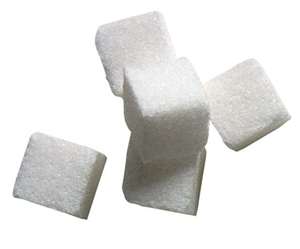 For this lab, we began by observing the four sugar cubes to determine their properties. Then, we were required to crush them with the mortar and pestle until it became a powder. A physical change had taken place because the cube had been broken down, changing form. For the second part of the lab, we began by placing two of the sugar cubes into the test tube and lighting the Bunsen burner. We held the test tube near the burner and watched the sugar burn. Very quickly, it caramelized, turning into a golden-brown color that seemed to be a bubbling liquid. Then, just as quickly, it became black and hard. Shortly after it went through this change, a yellow-colored smoke came out from the test tube, and the process was almost complete. After the test tube took a moment to cool down, Mrs. Rousseau carefully broke the test tube so we could observe it more closely. The black substance took up about half the test tube, taking its shape. The substance was hard, but easy to break, and the texture was exactly the same as the sugar cube. The sugar cube had liquidated, then solidified. It went through physical and chemical changes.
 The labs allowed us to observe changes in physical and chemical property and each built on to our knowledge about changes in states of matter. Overall, it was fun to complete experiments with fire.

Monday, January 9, 2012
Separating a Mixture - Lab Procedure
In order to complete this lab, my group went through the following procedure:
1. Remove the two red toothpicks from the cup with your fingers.
2. Remove the beans with the spoon (make sure you remove all of them).
3. Use the funnel and filter paper to isolate the water in the flask.
4. Remove the small piece of glass near the bottom of the cup.
5. Use a small amount of water in the flask and boil it on the hot plate for 5-10 minutes.
6. Remove the iron filings from the cup using the magnet, leaving the sand alone in the cup.
7. Use the magnifying glass to identify the buildup on the side and bottom of the flask after the water has boiled.
8. Identify each of the seven objects. You should have found glass, iron filings, toothpicks, water, salt, sand, and beans.
1. Remove the two red toothpicks from the cup with your fingers.
2. Remove the beans with the spoon (make sure you remove all of them).
3. Use the funnel and filter paper to isolate the water in the flask.
4. Remove the small piece of glass near the bottom of the cup.
5. Use a small amount of water in the flask and boil it on the hot plate for 5-10 minutes.
6. Remove the iron filings from the cup using the magnet, leaving the sand alone in the cup.
7. Use the magnifying glass to identify the buildup on the side and bottom of the flask after the water has boiled.
8. Identify each of the seven objects. You should have found glass, iron filings, toothpicks, water, salt, sand, and beans.
Monday, December 19, 2011
Frog Dissection
I completed this dissection online, because I was absent on the two days that this task was completed. The following website was used to give me a thorough understanding of the dissection of a frog: http://frog.edschool.virginia.edu/Frog2/ To begin, the website provided photos of the incisions of the frog, followed by the identification of each organ. It specifically explained how the organs should look, and it also included photos and videos to complete the visual. This tool allowed me to see the whole of the dissection without completing it myself, and it was very helpful when preparing for the test.
This task, like the worm dissection, helped us compare life systems of other organisms to human life systems. Though I personally dislike dissections, they have allowed me to expand on my knowledge of life systems and how alike organisms are. I am curious to see how further dissections will work out for me.

(photo from http://true-wildlife.blogspot.com/2011/02/frog.html)
This task, like the worm dissection, helped us compare life systems of other organisms to human life systems. Though I personally dislike dissections, they have allowed me to expand on my knowledge of life systems and how alike organisms are. I am curious to see how further dissections will work out for me.
(photo from http://true-wildlife.blogspot.com/2011/02/frog.html)
Sunday, December 4, 2011
The Immune System Animated Movie
The Immune System
by: broadwaybound37
Information received from "Human Biology and Health," published by Prentice Hall Science.
Animation created on XtraNormal.com
by: broadwaybound37
Information received from "Human Biology and Health," published by Prentice Hall Science.
Animation created on XtraNormal.com
Tuesday, November 8, 2011
Digestion Lab
This lab was completed to observe how substances in your stomach work together to digest food. Each of the four test tubes represented a stomach. In test tube A was pepsin, which is a control. This means that it is a significant component in the digestion process. In test tube C was hydrochloric acid, which is also a control. In test tube B was a mixture of pepsin and water, while test tube D contained a mixture of hydrochloric acid and pepsin. Also, in each test tube were three cubes of egg whites, being the food that would be digested. The "digestion system" that was most successful was the one in test tube D. This is because the two controls together make for a faster digestion. Controls, by themselves, can not function correctly; they need support from eachother or another substance, such as water. This lab allowed us to see a model of the digestion system in action and how it really works.
Thursday, October 20, 2011
Chicken Wing Dissection - Class Response
Today, the class observed as Mrs. Rousseau dissected a chicken wing to show us the makeup of tissues. We observed the tissues and what other tissues they attach to. The skin is an epithelial tissue, and it attaches to muscle tissue. Fat also attaches to muscle tissue. When we were observing the muscles in the wing, Mrs. Rousseau located the two that bend and straighten the elbow joint. The flexor bends the joint, then the extensor pulls in the bone in the other direction to straighten it. We observed this movement and made a connection to a human arm flexing. We were able to see muscles, tendons, joints, and ligaments working together. When it came down to the bone, we observed the cartilage, which is connected to the bone. This was cut open, and we observed the bone marrow, which was a red color. We discovered and observed many parts, though we did not see any nerves. This observation of this dissection was helpful in making connections to a human body and better understand makeups of the human body.
Wednesday, October 12, 2011
October 11, 2011 - Diffusion Experiment
In science class yesterday, we completed a diffusion experiment. To begin, a beaker was filled halfway with water. Then, a teaspoon of corn starch was placed into a plastic bag, which was secured shut and submerged in the water in the beaker. The last step of the preparation was to drop iodine into the water. After sitting for about fifteen minutes, the iodine should have diffused into the plastic bag, which is permeable to liquid substances. The mixture of iodine and water should have entered the plastic bag, changing the starch from a translucent white color to a dark purple color. However, only a small portion of the bag's contents were changed to the purple color, and it was a lighter shade than expected. This may have been because the iodine was not given enough time to complete the full process of osmosis. When this experiment was put in place for an extended period of time by Mrs. Rousseau, the process worked out, and the iodine diffused into the starch. Overall, this experiment was a great way to learn about osmosis and diffusion.
Monday, May 23, 2011
Making a Recycled Gravity Car
When I began to create my car, I tested out a few different ideas of what materials to use and how I would get each part to work together. I tested out bases of water bottles and boxes. When I came upon a decision, I used a recycled box for the base. To begin, I decorated the box with comic newspaper print. Then, I created holes in the side where the axles could go through. After having to make a decision between straws and skewers, I decided to use straws for the axles. Next, I put two CD discss together for each of the wheels. These are fastened in place with putty. After all four wheels were put in place, I placed extra putty for more support of the wheels. Then, I tested the vehicle to make sure everything was successful and working correctly. For more support, I steadied the box and put more support on the wheels so that they would be able to move the vehicle. This vehicle does not have an engine and cannot be accelerated by rubber bands. As a result of this process, my Recycled Gravity Car was created.
Monday, May 16, 2011
Seal Whiskers

It has been known that harbor seals can use their whiskers to detect movement, and that this skill helps them capture their prey. However, German researchers have conducted lab tests that have proven it possible for a seal to distinguish items by shape and size, using only their whiskers.
During the lab test, a harbor seal's head was placed into a box that is used for experiments, which was placed inside a tank. The seal's essential senses, such as sight and hearing, were made unable to use, so the whiskers' skills could be more easily observed. Paddles were used in this experimentation. As each paddle of different shape and size was placed into the tank, the seal was able to use its whiskers to distinguish it by the disruptions that the paddles made in the water. This experiment gave researchers and scientists an idea of how a seal can use body parts other than eyes, ears, nose, etc. to their own benefit. This discovery is impactful in many ways, including the possibility of experiments on other animals to find how they use their uncommon body parts to their advantage. This was a discovery that makes people look at seals in a whole new way. Before I read this article, I didn't even know that seals use their whiskers in a beneficial way at all!
For more information, visit the following link:
http://www.nytimes.com/2011/05/17/science/17obseals.html?ref=research
Tuesday, April 12, 2011
Soaring Straws: Lab Report
Gravitational potential energy and elastic potential engery are related and easily observed in this experiment. When the stretch of the rubber band was shorter, there was a greater result of gravitational potential energy. However, there should have been more height and gravitational potential energy with a longer stretch of the rubber band. If the rocket starts lower in the launcher, there is more of an opportunity to fly higher, thus producing more elastic potential energy. When there is more elastic potential energy, it will lead to a larger quantity of gravitational potential energy.
While collecting this data and creating the documentation, there were many places for possible errors. When we were flying the rocket, we came across one conflict in the data collection. As mentioned before, when there was a shorter stretch of the rubber band (three centimeters), there was more gravitational potential energy and height. This did not go with the relationship between elastic potential energy and gravitational potential energy. I am unsure of how this occurred, but it did not go with the facts of the relationship. Lastly, there are possible ways that this lab could be enhanced. Possible changes include a change of the manipulated variable and responding variable. There could be another element included that would take the role of the manipulated variable. Other than that, this lab was a helpful way to visualize calculations of gravitational potential energy.
While collecting this data and creating the documentation, there were many places for possible errors. When we were flying the rocket, we came across one conflict in the data collection. As mentioned before, when there was a shorter stretch of the rubber band (three centimeters), there was more gravitational potential energy and height. This did not go with the relationship between elastic potential energy and gravitational potential energy. I am unsure of how this occurred, but it did not go with the facts of the relationship. Lastly, there are possible ways that this lab could be enhanced. Possible changes include a change of the manipulated variable and responding variable. There could be another element included that would take the role of the manipulated variable. Other than that, this lab was a helpful way to visualize calculations of gravitational potential energy.
Wednesday, March 2, 2011
"Branches of Happiness" - Extra Credit Assignment
Branches of Happiness
I face the world alone,
Besides the birds on my branches.
I cannot go far, though the wind will rock me,
And the sun hurts my eyes.
Though my existence seems hard,
You must know,
Being a tree is not so bad.
I get to watch people walking below,
Almost as happy as I am.
Though I am confined to my space in the ground,
I can still have dreams,
And watch humans live them for me.
This poem was inspired by "Dragon Tree" by Douglas Florian. Florian's poem inspired me to write a poem that included personification, and about a tree. However, the idea to write a free-verse poem was my own.
Wednesday, February 9, 2011
"Toothpick Fish" Lab Analysis
When simulating fish allele movements in a gene pool, the population and allele passes were tracked and analyzed. In the beginning of this lab, there were twenty four fish (toothpicks) in the gene pool (cup); there were red, yellow, and green fish (eight of each). With each passing generation, the population and offspring changed. Each time pairs of toothpicks were removed from the cup, new offspring was born, and their phenotypes and genotypes were recorded. In the first generation, there were six green fish offspring, one red, two yellow, and three orange. However, the yellow fish were removed and placed in the morgue, because they could not adapt and survive. By the third generation, there were seven green, one red, zero yellow, and one orange offspring. By then, all the yellow fish had been eaten (placed in the morgue). In the fourth generation, there were six green offspring, one red, zero yellow and one orange. The number of offspring had gone from twelve to nine. However, of course, the seaweed and algae (that the fish live off of) will not be there forever.
At this point, an environmental disaster occurred; factory waste was disposed of, into the stream. Exposed rocks and sand are now perfect for camoflauge for red, yellow, and orange fish. However, the seaweed and algae have died, so the green fish are easy to see and are eaten. All of the green toothpicks were removed from the cup. The surviving population of offspring then consisted of three fish (one red and two orange). This disaster showed how adaptations are important to a living creature in their environment and how allele passes can be disturbed or obstructed. If this lab was slightly altered, the outcome would also be altered. Say the environmental disaster was a chemical dropped in the water that changed the pigment of the seaweed and algae from green to red. Green and yellow fish would be easy to see, so they would most likely be eaten very quickly. Also, because there would be no yellow alleles, the creation of orange offspring would not be possible. This lab simulated and demonstrated fish allele passes, adaptations in environments, and necessities of creatured in their environments; a lot was learned during this task.
At this point, an environmental disaster occurred; factory waste was disposed of, into the stream. Exposed rocks and sand are now perfect for camoflauge for red, yellow, and orange fish. However, the seaweed and algae have died, so the green fish are easy to see and are eaten. All of the green toothpicks were removed from the cup. The surviving population of offspring then consisted of three fish (one red and two orange). This disaster showed how adaptations are important to a living creature in their environment and how allele passes can be disturbed or obstructed. If this lab was slightly altered, the outcome would also be altered. Say the environmental disaster was a chemical dropped in the water that changed the pigment of the seaweed and algae from green to red. Green and yellow fish would be easy to see, so they would most likely be eaten very quickly. Also, because there would be no yellow alleles, the creation of orange offspring would not be possible. This lab simulated and demonstrated fish allele passes, adaptations in environments, and necessities of creatured in their environments; a lot was learned during this task.
Sunday, January 30, 2011
Trans Fat Leads to Depression?
Ever hear the trick of eating ice cream to feel better when you're sad? This actually has the opposite effect! Eating ice cream, or any fatty food, to try to feel better could lead to a risk of depression. Researchers in Spain observed the diet, daily routines, and mental health of over twelve thousand people, and discovered 657 new cases of depression. Also discovered was the fact that, as more trans fat was consumed, depression developed even more. "The study also found that people who ate a lot of monounsaturated and polyunsaturated fats, like those found in olive oil, had a lower risk of depression — but that association diminished when researchers controlled for other dietary factors such as adherence to the Mediterranean diet" (Melnick). Americans happen to take in more trans fat than people in Spain, from processed, fried, fast foods, and more. However, the study is not positive of whether the association of trans fat and depression is accurate, but author Miguel Angel Martinez-Gonzalez suggests that first, trans fat is consumed, then comes depression. Now, I will reconsider eating ice cream when I am sad, because it may make me even more upset!
This article interested me because I have heard of the idea of eating ice cream to get over a break up or other sad time. I was curious to read about the study, and I kept wanting to find out more as I read.
To read the article, visit the following link: http://healthland.time.com/2011/01/27/eating-fatty-foods-may-up-your-risk-of-depression/#more-23907
This article interested me because I have heard of the idea of eating ice cream to get over a break up or other sad time. I was curious to read about the study, and I kept wanting to find out more as I read.
To read the article, visit the following link: http://healthland.time.com/2011/01/27/eating-fatty-foods-may-up-your-risk-of-depression/#more-23907
Friday, January 14, 2011
Zodiac Signs- Wrong?
While reading this article about the change in Zodiac signs, I was very curious. I was intrigued, and I wanted to keep reading and acquire more information. The Earth seems to be "wobbling," so the position is different. "Astrological signs are determined by the position of the sun relative to certain constellations on a person's day of birth" (Pappas). However, because of the change, Zodiac signs will be different by approximately a month. I was interested in this because I often read my horoscope. I had always been a Gemini, but now, a Taurus? However, I will continue to read the Gemini horoscope, because that article states that there is a lack of evidence.
To read the article, follow this link: http://www.livescience.com/strangenews/wobbly-earth-horoscope-zodiac-wrong-110113.html
To read the article, follow this link: http://www.livescience.com/strangenews/wobbly-earth-horoscope-zodiac-wrong-110113.html
Monday, October 18, 2010
Niche

A niche is a job or role in a community. This is my dog, Kaylee. Her niche is being a pet and a friend to my family, friends, and I. I chose this becuse my dog is important to our family and she plays an important role.
Thursday, September 30, 2010
Biotic Limiting Factor

This is a tree outside of our middle school. It is a biotic limiting factor. It is a limiting factor because, if it were to be cut down, the animals that live in it would lose their home. Also, it could limit oxygen for humans. The tree is biotic because it is living.
Subscribe to:
Posts (Atom)